
‘Art-ist Class’:
INTRODUCTION TO STILL LIFE PAINTING
~ An 8‑Part Introductory Course ~
Monday, January 18 - Monday, March 8: 6:30pm ~ 8:30pm + EXHIBITION
This studio-based oil painting course explores the art of still life through careful observation, thoughtful composition, and an understanding of light, form, and colour. Working from carefully arranged objects, participants will develop their ability to translate three-dimensional subjects onto a two-dimensional surface, exploring how light reveals form, creates atmosphere, and brings everyday objects to life. Each two-hour session builds upon the last, developing both technical skills and artistic confidence. The final bonus session includes a group exhibition to celebrate everyone's work — nothing is for sale, no pressure, just an opportunity to share what we've created.
These “Art-ist” classes go beyond simply learning how to paint what we see. They're about understanding why we make certain artistic choices and how those decisions shape the finished painting. As an international exhibiting artist, Christopher shares his approach to composition, observation, colour relationships, and the balance between technical precision and personal expression. Participants will explore how the simplest arrangements of objects can become compelling works of art through thoughtful interpretation, experimentation, and a growing confidence in their own artistic judgement.
Course Highlights:
Class 1 – Learning to See: The Drama of Light
Monday, January 18 | 6:30–8:30 p.m. We begin by exploring how light transforms ordinary objects into compelling subjects. Drawing inspiration from the dramatic lighting of classical painting, participants work in black and white to study tonal relationships, contrast, and the interaction between light and shadow. Using a simple arrangement of objects illuminated by a single light source, we explore how to establish atmosphere, depth, and a convincing sense of form.
Class 2 – Painting Light: Reflections, Shadows & Form
Building on our tonal studies, we introduce reflective surfaces, including metal bowls and simple ceramic vessels. Participants explore how light behaves differently across matte, polished, and curved surfaces, learning to observe highlights, reflected light, and subtle tonal transitions. The emphasis is on developing greater control over edges, contrast, and the illusion of three-dimensional form.
Class 3 – The Art of Arrangement: Learning from Morandi
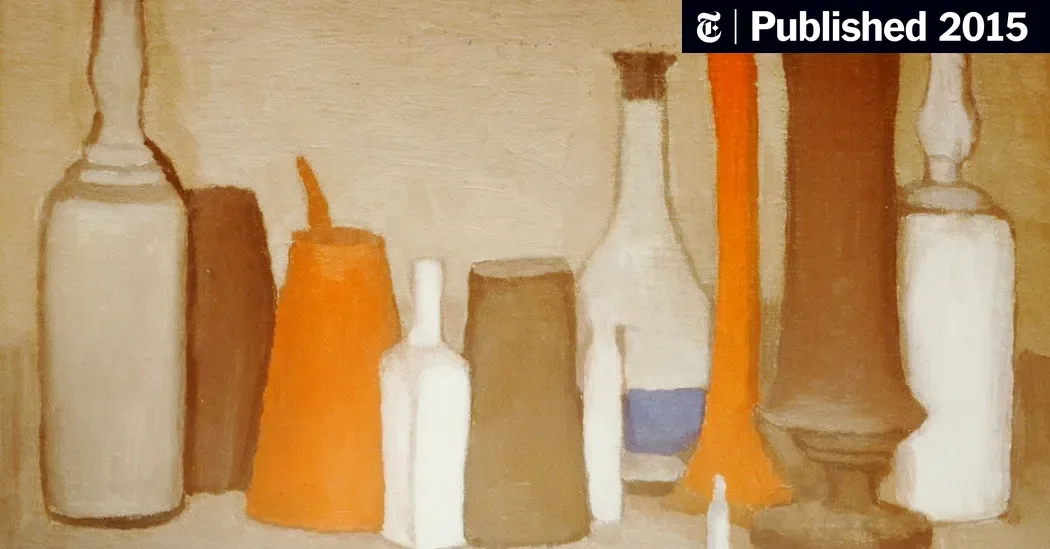
What makes an arrangement of ordinary objects visually compelling? Inspired by the quiet, carefully considered still lifes of Giorgio Morandi, we explore composition, negative space, proportion, and the relationships between objects. Participants experiment with arranging vessels, bowls, and other everyday subjects, discovering how even small adjustments in placement, lighting, and perspective can dramatically change a painting's character.
Class 4 – Classical Still Life: Fruit, Metal & Fabric
We introduce a more complex still life featuring fruit, reflective metal, and draped fabric. Participants begin by considering composition, lighting, and focal points before developing preliminary sketches and establishing the major shapes and tonal relationships of their paintings. Emphasis is placed on thoughtful planning and understanding how contrasting textures and surfaces contribute to a unified composition.
Class 5 – Colour, Texture & the Illusion of Reality
Continuing our classical still life, we explore how colour, temperature, and brushwork can describe different materials. From the reflective surface of a metal bowl to the softness of fruit and the folds of fabric, participants develop techniques for creating convincing textures while maintaining harmony throughout the painting. Drawing inspiration from classical and contemporary realist painters, we consider the balance between careful observation and personal interpretation.
Class 6 – Refining the Still Life: Edges, Atmosphere & Focus
As our paintings approach completion, we examine how artists direct the viewer's attention through selective detail, softened edges, contrast, and carefully controlled highlights. Participants refine their compositions, strengthen focal points, and explore how restraint can create a more convincing and atmospheric painting. Individual guidance focuses on developing each painter's technical confidence and artistic judgement.
Class 7 – Creating Drama: Designing Your Own Still Life
For our final painting, participants take control of the entire creative process. Using a selection of classical still-life objects, each painter develops a personal arrangement, experimenting with dramatic lighting, unusual perspectives, and carefully considered compositions. Inspired by the theatrical use of light in classical painting and the quieter sensibilities of Morandi, students explore how to transform familiar objects into paintings with atmosphere, tension, and visual impact.
Class 8 – The Artist's Eye: Resolution & Presentation
In our final instructional session, participants continue developing their personal still-life paintings, refining form, colour, texture, and composition. We discuss the decisions that distinguish a technically competent painting from a compelling work of art, including knowing what to emphasize, what to simplify, and when to stop. The session concludes with preparation for our group exhibition, celebrating each participant's progress and developing artistic voice.
- - - - - - - - - - - - - - - - - - - - - - - - - - - - - - - -
Exhibition – A Celebration of the Process
The course ends with a relaxed, community-driven pop-up exhibition. Each participant will display a selection of works - from sketches and studies to final paintings - in a casual, non-commercial setting. It’s a celebration of growth, creativity, and shared experience.
“[Christopher] has the knack of encouraging his students to not to fear taking chances and feeling free in translating their ideas to canvas.””
When: Monday, January 18 - Monday, March 8: 6:30pm ~ 8:30pm + EXHIBITION
Where: Suite 201 - 995 Herring Cove Road, Herring Cove, Nova Scotia, B3V-1H6
Fee: $275.00 (tax inc.)
Maximum 9 Participant Spaces
Registration: to register for the session or for more information, please email Christopher at info@cwebb.ca and he will respond within 1 day.
Eight Weeks. So much growth.

Meet your instructor
Christopher Webb is an internationally recognized, award-winning artist and art educator. His work has been exhibited across Canada and Europe, including a recent show at Marina Bastianello Gallery (Venice, 2026) following his receipt of the CREA - Cantieri Del Contemporaneo Venezia Prize for Painting. Click this link to learn more about Christopher and his art practice.
Testimonial
“Christopher's art classes opened up a whole new world for me. He helped me understand the basics of painting and how to let my inner thoughts and visions transfer to my hand. He has the knack of encouraging his students to not to fear taking chances and feeling free in translating their ideas to canvas.”
About Christopher Webb’s Studio Workshop Series
Welcome to the STUDIO WORKSHOP SERIES, a unique offering of hands-on art workshops led by celebrated Canadian multidisciplinary artist Christopher Webb. These intimate sessions take place in Webb’s stunning, light-filled studio above PAVIA in Herring Cove—an inspiring creative space surrounded by natural beauty.
With over 20 years of experience teaching, lecturing, and mentoring, Christopher has built a reputation for offering thoughtful, engaging, and artistically enriching workshops. His work has been exhibited internationally, and his career spans visual arts, curation, and arts entrepreneurship. Through this workshop series, he brings his deep knowledge, generosity of spirit, and passion for artistic exploration to a small group setting—providing a rare opportunity to develop technique, build creative confidence, and expand your visual language.
While most workshops are led by Christopher himself, he also invites guest artists whose work and teaching he deeply respects. With only 8-10 participant spaces available per workshop, these are truly immersive, high-quality experiences for those looking to take their creative practice to the next level in a meaningful and supportive environment.